
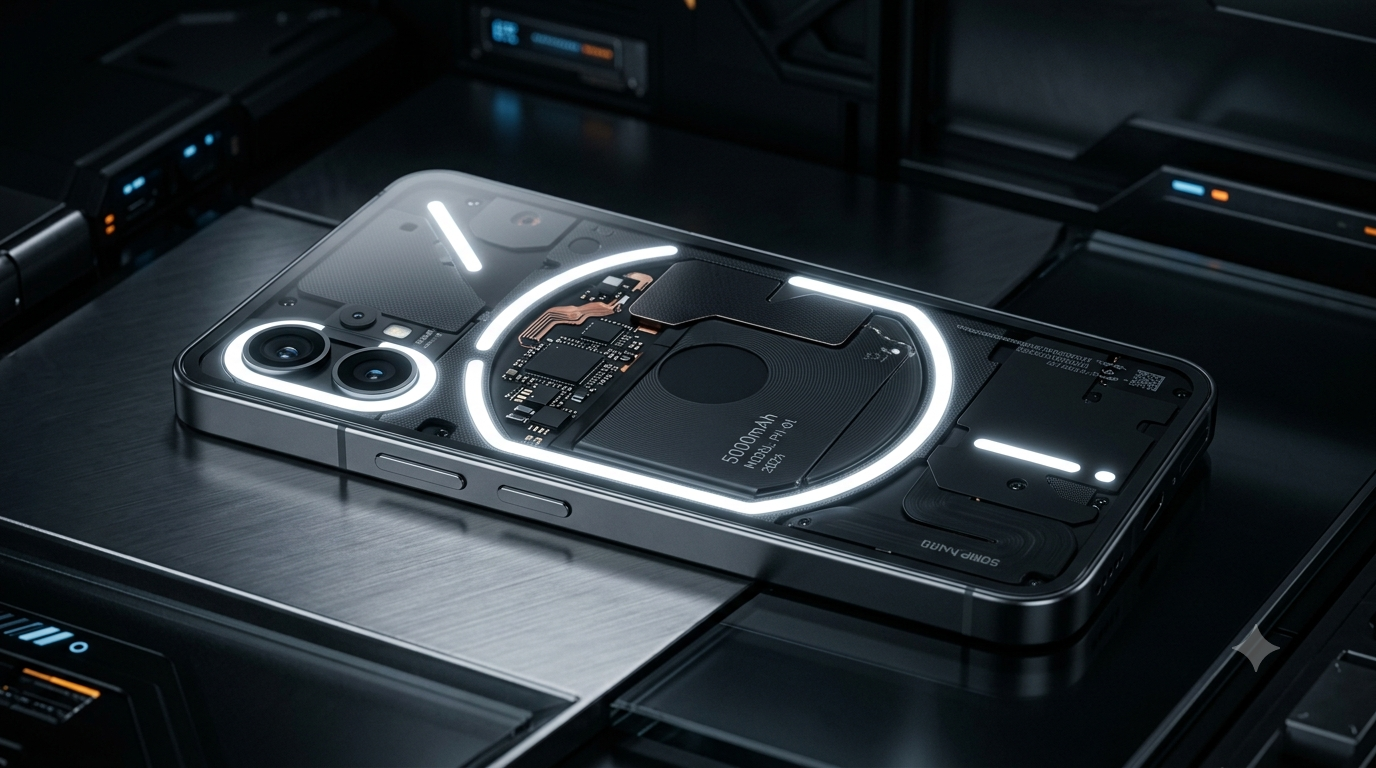
Most phones today look like the same black glass slab with a different logo. Nothing has been trying to break that pattern for a few years now, and by 2026, it's actually built a real identity in a market where almost everyone else looks the same. This review looks at what makes the Nothing Phone lineup — particularly the flagship Phone 3 — genuinely different, and where it still falls short.
Design: The Part Everyone Notices First
Nothing's signature look is the transparent glass back paired with the Glyph Interface — a pattern of lights on the back that can notify you, show progress, or just look interesting. The camera layout is asymmetrical, which some people love instantly and others find a bit odd — it's genuinely a love-it-or-hate-it design choice.
What's interesting is that this reaction tends to fade with regular use — the unusual design becomes normal to live with day-to-day, while still making people glance twice when they see it. That's honestly rare in a market full of interchangeable phone designs.
Software: Where Nothing Actually Wins
This is the part that consistently gets praise. Nothing OS is clean, minimal, and doesn't feel bloated with unnecessary apps or duplicate features — a big contrast to a lot of Android skins from other brands that pile on extra apps and settings menus you never asked for. Even after long-term use, it still feels distinctly "Nothing" rather than blending into generic Android.
On the update front, Nothing has also been reasonably serious about long-term support. The current flagship runs on Nothing OS 4.1 (based on Android 16), with several more years of OS updates and security patches still promised going forward — which matters a lot if you want a phone that stays current well past your first year of owning it.
Camera: Solid, Not Flashy
Nothing's camera tuning takes a more restrained, natural color approach compared to rivals from Xiaomi, OnePlus, Oppo, or Vivo, who tend to push more vibrant, punchy colors straight out of the camera. If you prefer photos that look closer to real life rather than heavily processed, this works in Nothing's favor. If you want punchy, ready-to-post colors without editing, you might find it a bit muted for your taste.
The higher-end models in the lineup (like the 4a Pro) go further with a genuine telephoto camera setup, which is a meaningful step up from most phones in a similar price bracket that skip a proper zoom lens entirely.
Performance and Battery
Depending on which model you pick, you'll find a range of chipsets — from Snapdragon 6-series in the more affordable models to Snapdragon 8-series in the flagship. Daily performance across the lineup has generally been smooth, without the stutter or slowdown you sometimes get from budget Android phones.
Battery life varies by model too. Some of the newer releases in the lineup specifically prioritize battery, with large 6,000mAh+ capacities aimed at people who stream, scroll, and navigate heavily through the day.
Who Should Actually Buy This?
If you want a phone that looks different from everything else and you don't mind an unconventional design — Nothing delivers something genuinely distinct here.
If you care about clean software without bloatware — this is arguably Nothing's strongest selling point, rivaling even Google's own Pixel software experience for smoothness.
If you want the most punchy, vibrant camera output straight out of the box — you might prefer a rival brand's more aggressive color tuning instead.
If flagship-level cameras and top-tier performance are your top priority above everything else — Nothing's flagship is competitive, but not always the outright class leader in either category.
The Bottom Line
Nothing has managed to do something genuinely difficult in the smartphone world: build a visual identity that's instantly recognizable, backed by software that actually respects your attention instead of cluttering it. It's not going to win every spec-sheet comparison against bigger rivals, but if you're tired of every phone looking and feeling the same, it remains one of the more interesting choices you can make in 2026 — bold design, clean software, and an experience that doesn't fade into the background.